Showing posts with label DryShips Inc.. Show all posts

Wednesday, July 27, 2011

DryShips Inc. (NASDAQ: DRYS): Q2 Earnings Preview 2011


DryShips Inc. (NASDAQ: DRYS) is scheuled to release its second-quarter earnings after the closing bell on Wednesday, July 27, 2011. Analysts, on average, expect the company to report earnings of 18 cents per share on revenue of $272.56 million. In the year ago period, the company reported earnings of 30 cents per share on revenue of $224.24 million.

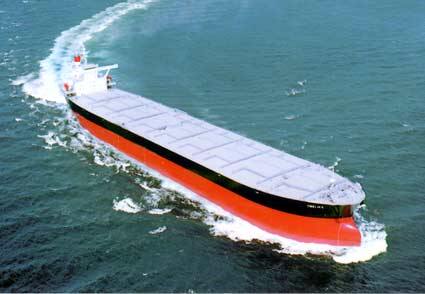
DryShips, Inc. engages in the ownership and operation of drybulk carriers that operate worldwide. The company's fleet carries various drybulk commodities, including coal, iron ore, grains, bauxite, phosphate, fertilizers, and steel products.

DryShips is somewhat unique in the shipping industry in that it operates both drybulk carriers and also offshore oil deep water drilling units. Through its majority owned subsidiary, Ocean Rig UDW Inc., DryShips owns and operates 9 offshore ultra deepwater drilling units, comprising of 2 ultra deepwater semisubmersible drilling rigs and 7 ultra deepwater drillships, 5 of which remain to be delivered to the Company during 2011 and 2013. As of July 21, DryShips owned a fleet of 38 drybulk carriers (including newbuildings), comprising 9 Capesize, 27 Panamax and 2 Supramax, with a combined deadweight tonnage of over 3.4 million tons, and 12 tankers (including newbuildings), comprising 6 Suezmax and 6 Aframax, with a combined deadweight tonnage of over 1.6 million tons.

In the preceding first-quarter, the Athens, Greece based company's net income was $25.8 million, or 7 cents per share, compared to $13.3 million, or 4 cents per share, in the prior-year period. On an adjusted basis, the company earned 15 cents per share in the first quarter. Revenue rose to $207.4 million from $194.2 million in the same quarter last year. Analysts, on average, expected the company to report earnings of 16 cents per share on revenue of $234.12 million.

The dry bulk shipping industries' fortunes are closely tied to global growth as these ships are responsible for carrying the materials required in economic expansion. However, despite improving global macroeconomic scenario, the financial condition of this industry is worse than what it was a year or two ago. An oversupply of ships and mediocre demand has severely damaged the drybulk industry and has forced companies to search elsewhere for revenues.  With a falling dollar and the upward manipulation of the Chinese Yuan, there seems to be less reason to ship commodities long distances, as the prices of these commodities are getting closer and closer to one another. Along with these currency issues, there may be simply too little demand and too many empty boats for shipping companies. The traditional indicator of the shipping industry's health, the Baltic Dry Index, has plummeted close to 20 percent since the beginning of the year as demand for dry-bulk shipping has fallen. This downturn has sent average vessel prices down 65 percent from 2008 all-time highs. The company sees strong shipping demand over the long haul due to a "record pace of Chinese commodity imports," but this demand will likely continue to be uneven. 

DryShips is steadily transforming itself as a drillship company from a drybulk cargo operator. Therefore, both the top line and bottom line are benefiting from lucrative ultra deep-water oil drilling industry.  The company will spin off the unit in an IPO within the next few months. The planned listing of Ocean Rig shares will help unlock the value of DryShips. The unit recently secured a $1.1 billion contract from Brazil's Petrobras and has obtained all the required financing for building new drillships. 

Dryships has also invested a great deal of money trying to establish a presence in the oil-tanker market.

Among other developments, the company recently agreed to acquire the outstanding shares of OceanFreight for consideration per share of $19.85, consisting of $11.25 in cash and 0.52326 of a share of common stock of Ocean Rig UDW Inc., a global provider of offshore ultra deepwater drilling services that is 78% owned by DryShips.  OceanFreight owns four capesize and two panamax vessels with an average age of six years and tonnage of 859,622 tons. 

Full Disclosure: None.

Wednesday, May 11, 2011

DryShips Inc. (NASDAQ: DRYS): Q1 Earnings Preview 2011

DryShips

DryShips Inc. (NASDAQ: DRYS) is likely to release its first-quarter earnings after the closing bell on Thursday, May 12, 2011. Analysts, on average, expect the company to report earnings of 16 cents per share on revenue of $234.12 million. In the year ago period, the company reported earnings of 21 cents per share on revenue of $194.16 million.

DryShips, Inc. engages in the ownership and operation of drybulk carriers that operate worldwide. The company's fleet carries various drybulk commodities, including coal, iron ore, grains, bauxite, phosphate, fertilizers, and steel products.

DryShips is somewhat unique in the shipping industry in that it operates both drybulk carriers and also offshore oil deep water drilling units. DryShips owns and operates 8 offshore ultra deepwater drilling units, comprising of 2 ultra deepwater semisubmersible drilling rigs and 6 ultra deepwater drillships, 4 of which remain to be delivered to the company during 2011 and 2013. As of May 9 2011, DryShips owned a fleet of 38 drybulk carriers (including newbuildings), comprising 7 Capesize, 29 Panamax and 2 Supramax, with a combined deadweight tonnage of over 3.4 million tons, and 12 tankers (including newbuildings), comprising 6 Suezmax and 6 Aframax, with a combined deadweight tonnage of over 1.6 million tons.

In the preceding fourth-quarter, the Athens, Greece based company's net income was $99.74 million, or 29 cents per share, compared to $9.60 million, or 2 cents per share, in the prior-year period. On an adjusted basis, the company earned 24 cents per share in the fourth quarter. Revenue rose to $215.82 million from a restated $196.43 million in the same quarter last year. Analysts, on average, expected the company to report earnings of 26 cents per share on revenue of $221.12 million.

At its last earnings call in March,the company said it sees increasingly attractive opportunities to purchase drybulk carriers and renew and/or grow its fleet.

In November 2010, DryShips declared that over 80% of its shipdays in 2011 are fixed at around $37,000 per day, which will help the company to avoid spot-market volatility. For 2012, almost 40% of drybulk fleets are already fixed. The company continues with its fleet renewal and expansion strategy in the drybulk sector, replacing older tonnage with newer and larger vessels. 

The dry bulk shipping industries' fortunes are closely tied to global growth as these ships are responsible for carrying the materials required in economic expansion. However, despite improving global macroeconomic scenario, the financial condition of this industry is worse than what it was a year or two ago. An oversupply of ships and mediocre demand has severely damaged the drybulk industry and has forced companies to search elsewhere for revenues. The traditional indicator of the shipping industry's health, the Baltic Dry Index, has plummeted close to fifty percent in the last six months as demand for dry-bulk shipping has fallen. The company sees strong shipping demand over the long haul due to a "record pace of Chinese commodity imports," but this demand will likely continue to be uneven. 

DryShips is steadily transforming itself as a drillship company from a drybulk cargo operator. Therefore, both the top line and bottom line are benefiting from lucrative ultra deep-water oil drilling industry. The company recently said that its drilling unit Ocean Rig UDW won a $80 million contract for one of its rigs. The 90-day contract for the Leiv Eiriksson was by British explorer and producer Borders and Southern Petroleum plc for drilling offshore the Falkland Islands. This contract replaces the previous contract with Borders & Southern for another one of Ocean Rig's rigs, the Eirik Raude. Last month, the company also exercised options to build two ultra-deepwater drillships with a South Korean shipyard, reckoning that demand for drilling services is strong across the globe. 

Dryships Inc. has also invested a great deal of money trying to establish a presence in the oil-tanker market. Last year, the company agreed with a Korean shipyard to purchase 12 tankers for about $770 million, including over $3 million per vessel in extra items. DryShips plans to use its tanker investments for a spinoff or initial public offering. Though the tanker market is realizing low freight rates, oil demand from Asian economies like China and India are expected to boost market conditions, the company said. The company is revamping its business, as it sees opportunities for both the drybulk and tanker segments. DryShips towards this end is mulling a standalone tankers-entity in 2011.

In addition to the operating volatility, DryShips frequently needs to secure financing as it can spend more to acquire vessels and make improvements to them than it generates in operating cash flow. It recently secured an $800 million loan to fund the construction of two ocean rigs and restructured a $1.1 billion term loan with Deutsche Bank (NYSE:DB) regarding a drilling contract with Brazilian energy giant Petrobras (NYSE:PBR) and a couple of smaller loans.

Full Disclosure: None.

Wednesday, March 30, 2011

DryShips Inc. (NASDAQ: DRYS): Q4 Earnings Preview 2010


DryShips Inc. (NASDAQ: DRYS) is likely to release its fourth-quarter earnings after the closing bell on Wednesday, March 30, 2011. Analysts, on average, expect the company to report earnings of 26 cents per share on revenue of $221.12 million. In the year ago period, the company reported earnings of 19 cents per share on revenue of $193.46 million.

DryShips, Inc. engages in the ownership and operation of drybulk carriers that operate worldwide. The company's fleet carries various drybulk commodities, including coal, iron ore, grains, bauxite, phosphate, fertilizers, and steel products.

DryShips is somewhat unique in the shipping industry in that it operates both drybulk carriers and also offshore oil deep water drilling units. As of January 4 2011, DryShips owned a fleet of 39 drybulk carriers (including newbuildings), comprising 7 Capesize, 30 Panamax and 2 Supramax, with a combined deadweight tonnage of over 3.5 million tons and 6 offshore ultra deepwater drilling units, comprising of 2 ultra deepwater semisubmersible drilling rigs and 4 ultra deepwater newbuilding drillships, three of which will be delivered in 2011.

In the preceding third quarter, the Athens, Greece based company's net income was $49.3 million, or 18 cents per share, compared with a profit of $31.4 million, or 11 cents per share, in the prior-year period. On an adjusted basis, the company earned 38 cents per share in the latest quarter. Revenue rose to $225.5 million from $222.2 million. Analysts, on average, expected the company to report earnings of 25 cents per share on revenue of $216.92 million.

At its last earnings call in November, DryShips declared that over 80% of its shipdays in 2011 are fixed at around $37,000 per day, which will help the company to avoid spot-market volatility. For 2012, almost 40% of drybulk fleets are already fixed. The company continues with its fleet renewal and expansion strategy in the drybulk sector, replacing older tonnage with newer and larger vessels. Furthermore, the company also announced that the rates for ultra deepwater rigs have bottomed out in the third quarter of 2010 at around low-$400,000 per day range. After that the scenario will become more favorable since the rates are trending upward and demand for drilling rig may surpass supply in 2011.

The dry bulk shipping industries' fortunes are closely tied to global growth as these ships are responsible for carrying the materials required in economic expansion. However , despite improving global macroeconomic scenario, the financial condition of this industry is worse than what it was a year or two ago. An oversupply of ships and mediocre demand has severely damaged the drybulk industry and has forced companies to search elsewhere for revenues. The traditional indicator of the industry's health, the Baltic Dry Index, has plummeted in 2011 as demand for dry-bulk shipping has fallen alongside commerce levels. The Baltic Dry Index has been on the slide since October. The index has lost more than 70% of its value in the last month or so and having retreated to a 2-year. The index slipped hard in January as flooding in Queensland -- the richest coal producing province in Australia -- shut down mines and curbed volumes of cargo to be delivered. Over that same period, average rates for short-term charters of the largest dry bulk carriers, called "Capesize" ships, have fallen from $46,284 a day to $10,285 in the same period -- a ghastly statistic considering most Capesize ships incur operating costs of at least $15,000 a day.

DryShips is steadily transforming itself as a drillship company from a drybulk cargo operator. Therefore, both the top line and bottom line are benefiting from lucrative ultra deep-water oil drilling industry. Early in January, the company announced that its subsidiary Ocean Rig UDW Inc. received contracts worth a combined $495 million for two rigs from Cairn Energy. On December 21, DryShips closed a share-offering of Ocean Rig UDW by way of a private placement that brought in gross proceeds of $500 million. DryShips said the proceeds of the offering are to be used to finance the construction costs of the ultra deepwater newbuilding drillships under construction at Samsung, exercise options to build further ultra deepwater drillships and general corporate purposes. Following this transaction DryShips Inc. owns approximately 78% of Ocean Rig UDW Inc.

Dryships Inc. has also invested a great deal of money trying to establish a presence in the oil-tanker market. In December, the company agreed with a Korean shipyard to purchase 12 tankers for about $770 million, including over $3 million per vessel in extra items. DryShips plans to use its tanker investments for a spinoff or initial public offering. Though the tanker market is realizing low freight rates, oil demand from Asian economies like China and India are expected to boost market conditions, the company said. The company is revamping its business, as it sees opportunities for both the drybulk and tanker segments. DryShips towards this end is mulling a standalone tankers-entity in 2011.

Full Disclosure: None.

Wednesday, May 12, 2010

DryShips Inc. (NASDAQ: DRYS): Q1 Earnings Preview

DryShips Inc. (NASDAQ: DRYS) is scheduled to release its first-quarter 2010 financial results after the market close on Wednesday, May 12, 2010. Analysts, on average, expect the company to report earnings of 22 cents a share on revenue of $202.78 million. In the year ago period, the company posted earnings of 35 cents per share on revenue of $196.62 million.

DryShips, Inc. engages in the ownership and operation of drybulk carriers that operate worldwide. The company's fleet carries various drybulk commodities, including coal, iron ore, grains, bauxite, phosphate, fertilizers, and steel products. DryShips owns a fleet of 39 drybulk carriers (including newbuildings) comprising 7 Capesize, 30 Panamax and 2 Supramax, with a combined deadweight tonnage of over 3.5 million tons, 2 ultra deep water semisubmersible drilling rigs and 4 ultra deep water newbuilding drillships.

Shipping companies were hit hard by the economic downturn and shipping rates plunged by more than 90% as global recession curtailed demand for commodities. After slowing to 3.0% in 2008, global trade volumes contracted by an estimated 13% in 2009--the first contraction since 1982 and the sharpest in the postwar period.

In the preceding fourth quarter, the Athens, Greece based company said that it swung to a profit of $1.3 million compared to a loss of $1 billion in the same quarter last year. On a per share basis, net loss narrowed to $0.01 from $18.42 in the year-ago period. Excluding charges and gains totaling $64.4 million or $0.24 per share, net income for the quarter was $65.8 million or $0.23 per share. Revenues for the fourth quarter increased to $193.4 million from $210.6 million in the year-ago period. Analysts estimated third quarter revenues of $215.65 million.

The drybulk shipping and contract drilling company commenced a $150 million convertible senior notes offering last month. It later raised the size of its senior notes offering by 47 percent to $220 million. The company intends to use the proceeds for vessel acquisitions and other general corporate purposes.

Meanwhile, global trade flows have improved significantly in recent times. As the world has begun to emerge from the downturn, the Baltic Dry Index shows that shipping rates have begun to recover from their lows. Baltic Dry Index, which had fallen 59 percent in 2009 from a year earlier, is trading near 5-month high amid increase in demand for Capesize vessels. The Index moved up nearly 13% over the past two months.

Chief Operating Officer Pankaj Khanna said recently that the company is seeking an initial public offering of its rig segment as early as September. The drilling IPO may triple DryShips’ shares to about $18 from the current price of below $6, Khanna said in an interview.

In terms of stock performance, DryShips shares have lost nearly 20% over the past year.

Full Disclosure: None.

Tuesday, February 23, 2010

DryShips Inc. (NASDAQ: DRYS): Q4 Earnings Preview 2009

DryShips Inc. (NASDAQ: DRYS) is scheduled to release its fiscal fourth-quarter 2009 financial results before the market open on Thursday, February 25, 2010. Analysts, on average, expect the company to report earnings of 23 cents a share on revenue of $215.65 million. In the year ago period, the company posted earnings of 25 cents per share on revenue of $217.89 million.

DryShips, Inc. engages in the ownership and operation of drybulk carriers that operate worldwide. The company's fleet carries various drybulk commodities, including coal, iron ore, grains, bauxite, phosphate, fertilizers, and steel products. DryShips owns a fleet of 39 drybulk carriers (including newbuildings) comprising 7 Capesize, 30 Panamax and 2 Supramax, with a combined deadweight tonnage of over 3.5 million tons, 2 ultra deep water semisubmersible drilling rigs and 4 ultra deep water newbuilding drillships.

Shipping companies were hit hard by the economic dowturn and shipping rates plunged by more than 90% as global recession curtailed demand for commodities. After slowing to 3.0% in 2008, global trade volumes contracted by an estimated 13% in 2009--the first contraction since 1982 and the sharpest in the postwar period. In the preceding fiscal-third quarter, the Athens, Greece based DryShips company said that its net income plunged to $35.6 million or $0.12 per share, compared with $180.0 million or $4.13 per share in the prior-year quarter. Excluding one-time items, third-quarter net income declined to $74.9 million or $0.27 per share from $151.0 million or $3.53 per share reported for the year-ago period. Revenue increased to $328.03 million from $228.2 million in the comparable period one-year ago. Analysts, on average, expected the company to report earnings of $0.20 per share on revenue of $210.65 million.

Looking ahead, though the company expects dry-bulk shipping demand to remain strong for the coming years, it anticipates that cancellations and delays in orders will alleviate the oversupply problem that it might face in the future quarters. "Our drybulk fleet is now virtually fully fixed for the remainder of 2009 and 2010 and 77% fixed for 2011 at healthy levels and we are prepared to leverage the volatility in freight rates in the future through further vessel acquisitions." George Economou, Chairman and chief executive officer said in November.

Meanwhile, trade flows have slightly moderated in some countries in fourth quarter 2009. As the world has begun to emerge from the downturn, the Baltic Dry Index shows that shipping rates have begun to recover from their lows, though they still remain far below peak levels. he Baltic Dry Index rose 200% in 2009, led by Chinese commodity demand and a pickup in commodity prices, but the index remains far below the record levels of 2008.

However, a short-term glut in shipping market seems inevitable as a bevy of new dryships are expected to hit the market later this year. According to a Bloomberg survey, the capesize fleet will expand by 20 percent this year, outstripping the 8 percent gain in demand. This may also again put pressure on shipping rates.

The company's stock currently trades at a forward P/E (fye 26-Dec-10) of 6.21. In terms of stock performance, DryShips shares have gained nearly 43% over the past year.

Full Disclosure: None.
Related Posts with Thumbnails

Wikinvest Wire