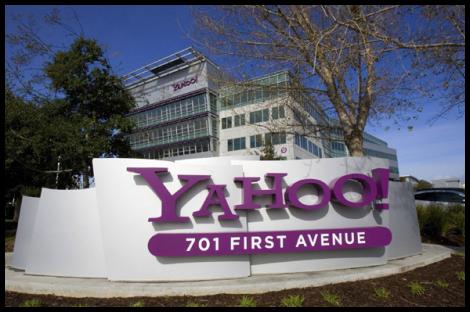
Showing posts with label Yahoo. Show all posts

Monday, July 18, 2011

Yahoo! Inc. (NASDAQ: YHOO): Q2 Earnings Preview 2011


Yahoo! Inc. (NASDAQ: YHOO) is scheduled to release its second-quarter earnings after the closing bell on Tuesday, July 19, 2011. Analysts, on average, expect the company to report earnings of 18 cents per share on revenue of $1.11 billion. In the year ago quarter, the company reported earnings of 15 cents per share on revenue of $1.13 billion.

Yahoo! Inc. provides online properties and services to users; and marketing services to advertisers worldwide. Yahoo! Inc., together with its consolidated subsidiaries, attracts hundreds of millions of users every month through its innovative technology and engaging content and services, making it one of the most trafficked Internet destinations. The company generates revenue by providing marketing services to advertisers across a majority of Yahoo! Properties and Affiliate sites.

In the preceding first quarter, the Sunnyvale, California-based company's net income was $223.0 million, or 17 cents per share, compared to $310.2 million, or 22 cents per share, in the prior year quarter. On an adjusted basis, the company earned 19 cents per share in the first quarter. Revenue dropped 24 percent to $1.214 billion from $1.600 billion in the same quarter last year. Analysts, on average, expected the company to report earnings of 16 cents per share on revenue of $1.06 billion. 

At its last earnings call in April, the internet giant said that it anticipates second quarter GAAP revenue of $1.230 billion to $1.290 billion, and revenue ex-TAC of $1.075 billion to $1.125 billion. Income from operations are expected in the range of $160 million to $190 million for the second quarter of 2011.

Yahoo CEO Carol Bartz has shut underperforming businesses, cut costs and has continued to improve its products, such as its home page and e-mail service. Last month, the company said that it plans to shut down several products, including Yahoo Buzz and Traffic APIs, in the coming months as part of restructuring, the internet portal.  Bartz has sought to streamline operations and has set a target of reaching a 24% operating margin by 2013. However, Bartz's turnaround strategy so far hasn't panned out the way investors hoped when Yahoo hired her to replace co-founder Jerry Yang in January 2009. 

Yahoo has also sought to focus more on its online display advertising business and other services, while outsourcing the inner workings of its search service as part of a revenue-sharing arrangement with Microsoft Corp. (NASDAQ: MSFT). According to the arrangement, Yahoo will share 12% of the search advertising revenue with Microsoft, while Microsoft will bear most of the associated expenses.

However, the company is facing stiff competition from social networking services like Facebook, which are attracting greater numbers of online visitors and advertisers. The company has been getting outhustled and outsmarted by Google Inc. and Facebook in the race for Internet advertising. By the end of this year, Yahoo's share of the $31 billion online ad market in the U.S. is expected to be 11 percent, down from 16 percent in 2009, according to the research firm eMarketer. Google's share is projected to be nearly 41 percent (up from 35 percent in 2009) and Facebook's share is forecast at 7 percent (up from 2.4 percent in 2009).

Shareholders are also worried that its more than 40 per cent investment in China’s Alibaba Group is being diluted, because that company has sold off leading Chinese payment processor Alipay to a group controlled by Alibaba founder Jack Ma on uncertain terms. Negotiations between Yahoo, Alibaba and Alibaba’s second-biggest shareholder Softbank are making substantial progress, the three said in a joint statement this week.

Full Disclosure: None.

Tuesday, April 19, 2011

Yahoo! Inc. (NASDAQ: YHOO): Q1 Earnings Preview 2011


Yahoo! Inc. (NASDAQ: YHOO) is scheduled to release its first-quarter earnings after the closing bell on Tuesday, April 19, 2011. Analysts, on average, expect the company to report earnings of 16 cents per share on revenue of $1.06 billion. In the year ago quarter, the company reported earnings of 22 cents per share on revenue of $1.13 billion.

Yahoo! Inc. provides online properties and services to users; and marketing services to advertisers worldwide. The Company attracts users every month through its technology and engaging content and services.

Yahoo! Inc. provides online properties and services to users; and marketing services to advertisers worldwide. Yahoo! Inc., together with its consolidated subsidiaries, attracts hundreds of millions of users every month through its innovative technology and engaging content and services, making it one of the most trafficked Internet destinations. The company generates revenue by providing marketing services to advertisers across a majority of Yahoo! Properties and Affiliate sites.

In the preceding fourth quarter, the Sunnyvale, California-based company's net income was$312 million or $0.24 per share, compared to $153 million or $0.11 per share in the prior year quarter. On an adjusted basis, the company earned 26 cents per share in the fourth quarter. Revenue dropped 12 percent to $1.53 billion from $1.73 billion. Analysts, on average, expected the company to report earnings of 22 cents per share on revenue of $1.19 billion. 

At its last earnings call in October, the internet giant said that it expects first-quarter GAAP revenue of $1.150 billion to $1.230 billion, and revenue ex-TAC of $1.020 billion to $1.080 billion.

Yahoo CEO Carol Bartz has shut underperforming businesses, cut costs and has continued to improve its products, such as its home page and e-mail service. Last month, the company said that it plans to shut down several products, including Yahoo Buzz and Traffic APIs, in the coming months as part of restructuring, the internet portal.  Bartz has sought to streamline operations and has set a target of reaching a 24% operating margin by 2013. However, Bartz's turnaround strategy so far hasn't panned out the way investors hoped when Yahoo hired her to replace co-founder Jerry Yang in January 2009. 

Yahoo has also sought to focus more on its online display advertising business and other services, while outsourcing the inner workings of its search service as part of a revenue-sharing arrangement with Microsoft Corp. (NASDAQ: MSFT). According to the arrangement, Yahoo will share 12% of the search advertising revenue with Microsoft, while Microsoft will bear most of the associated expenses.

However, the company is facing stiff competition from social networking services like Facebook, which are attracting greater numbers of online visitors and advertisers. 

The company's stock currently trades at a forward P/E (fye Dec 31, 2012) of 17.77 and PEG ratio (5 yr expected) of 2.02. In terms of stock performance, Yahoo shares have lost nearly 9 percent over the past year.

Full Disclosure: None.

Tuesday, January 25, 2011

Yahoo! Inc. (NASDAQ: YHOO): Q4 Earnings Preview 2010


Yahoo! Inc. (NASDAQ: YHOO) is scheduled to release its fourth-quarter financial results after the closing bell on Tuesday, January 25, 2011. Analysts, on average, expect the company to report earnings of 22 cents per share on revenue of $1.19 billion. In the year ago quarter, the company reported earnings of 11 cents per share on revenue of $1.26 billion.

Yahoo! Inc. provides online properties and services to users; and marketing services to advertisers worldwide. The Company attracts users every month through its technology and engaging content and services.

Yahoo! Inc. provides online properties and services to users; and marketing services to advertisers worldwide. Yahoo! Inc., together with its consolidated subsidiaries, attracts hundreds of millions of users every month through its innovative technology and engaging content and services, making it one of the most trafficked Internet destinations. The company generates revenue by providing marketing services to advertisers across a majority of Yahoo! Properties and Affiliate sites.

In the preceding third quarter, the Sunnyvale, California-based company's net income was $396.1 million, or 29 cents a share, compared to $186.1 million, or 13 cents a share, in the year-earlier quarter. On an adjusted basis, the company earned 17 cents per share in the latest quarter. Revenue rose 2 percent to $1.6 billion. Excluding traffic acquisition costs, revenues fell slightly to $1.12 billion from $1.13 billion in the same quarter last year. Analysts, on average, expected the company to report earnings of 15 cents per share on revenue of $1.13 billion. 

At its last earnings call in October, the internet giant said that it expects fourth-quarter GAAP revenue of $1.40 billion to $1.530 billion, and revenue, excluding TAC, of $1.125 billion to $1.225 billion. Analysts currently expect revenue of $1.26 billion for the fourth quarter.  Income from operations for the fourth quarter of 2010 is expected to be in the range of $200 million to $280 million. 

Yahoo CEO Carol Bartz has shut underperforming businesses, cut costs and has continued to improve its products, such as its home page and e-mail service. Last month, the company said that it plans to shut down several products, including Yahoo Buzz and Traffic APIs, in the coming months as part of restructuring, the internet portal. "Part of our organizational streamlining involves cutting our investment in underperforming or off-strategy products to put better focus on our core strengths and fund new innovation in the next year and beyond," Yahoo said in a statement.  In December, Yahoo confirmed that it is cutting 4% of its roughly 14,000 employees. In a statement, Yahoo said that the cuts are being made to position the company “for revenue growth and margin expansion and to support our strategy to deliver differentiated products to the marketplace.” CEO Carol Bartz has pledged to raise the company’s operating margin to as high as 24% by 2013, from its current level of around 12%. 

Yahoo has also sought to focus more on its online display advertising business and other services, while outsourcing the inner workings of its search service as part of a revenue-sharing arrangement with Microsoft Corp. (NASDAQ: MSFT).

However, the company is facing stiff competition from social networking services like Facebook, which are attracting greater numbers of online visitors and advertisers. According to web analytics firm ComScore, Facebook surpassed Yahoo in August to become the second most popular site for watching online video in the United States behind Google Inc's (NASDAQ: GOOG) YouTube.

Yahoo is also the target of takeover speculation, after varying reports that private-equity firms could be interested in taking it private.

In terms of stock performance, Yahoo shares have gained nearly 2 percent over the past year.

Full Disclosure: None.

Wednesday, April 14, 2010

Yahoo! Inc. (NASDAQ: YHOO): Q1 Earnings Preview 2010

Yahoo! Inc. (NASDAQ: YHOO) is scheduled to release its Q12010 earnings after the closing bell on Tuesday, April 20, 2010. Analysts, on average, expect the company to report earnings of $0.09 per share in the first quarter with estimates ranging from a low of $0.07 per share to a high of $0.12 per share. Revenues for the quarter are estimated to be $1.17 billion. In Q12009, the company reported earnings of $0.08 per share on revenue of $1.16 billion.

Yahoo! Inc. provides online properties and services to users; and marketing services to advertisers worldwide.

In the preceding Q12010, the Sunnyvale, California-based company reported that it swung to a profit of $152.95 million or $0.11 per share, compared to a loss of $303.43 million or $0.22 per share in the same quarter last year. Revenue totaled $1.73 billion, compared to $1.81 billion in the prior year quarter. Analysts, on average, expected the company to report earnings of $0.11 per share on revenue of $1.23 billion for the quarter.

According to company's own projections, revenue for the first quarter of 2010 is expected to be in the range of $1.575 billion to $1.675 billion. Income from operations for the first quarter of 2010 is expected to be in the range of $90 million to $110 million.

Online-ad business has been showing signs of picking up. According to ZenithOptimedia, worldwide online ad spending is expected to increase by nearly 13 percent this year to $62.6 billion. Internet ads, which overtook magazines last year with a 12.6 percent share of the total ad market, should take a 17 percent market share in 2012. It would be the third-largest recipient of ad spending, after TV and newspapers.

Meanwhile, Yahoo gained share in the U.S. Internet search market in March, reversing six months of declines. Yahoo's share inched higher to 16.9% from 16.8% in March, comScore reported.

In March, the company agreed to acquire Citizen Sports, a company that brings the world of sports to fans' favorite social networking sites and mobile devices through innovative applications. The company expects to complete the acquisition in the second quarter of 2010. Financial terms of the deal were not disclosed. Yahoo said the acquisition will strengthen its social strategy of enriching, aggregating and distributing social content from across the entire Web, and offering a highly customizable social experience.

In terms of stock performance, Yahoo shares have gained nearly 6 percent since the beginning of the year.

Full Disclosure: None.

Tuesday, June 9, 2009

LG launches LG KM900 Arena having Dolby Mobile surround system in ...

South Korean tech giant LG launched its newest full function-laden high end multimedia phone, called LG KM900 Arena in India.

Known to be the world’s first mobile phone with a Dolby Mobile surround sound, the mobile phone features a large 3.0 inch WVGA display screen.

Capable of supporting WiFi and 3G HSFPA, the Arena has an internal memory of 8GB that can be expanded to 32 GB.

Other features include 5 megapixel camera and an inbuilt FM radio.

Available in two colors, black and silver titanium, the LG Arena will come with a price tag of approximately Rs 35,000.

Monday, June 8, 2009

Sony Ericsson brings the most advanced mobile java platform to the entry 3G segment


New Delhi: Sony Ericsson recently announced plans to extend its mobile Java Platform into its entry 3G mobile phone portfolio. This means that games, applications and content developed on the Sony Ericsson Java platform will provide a compelling business opportunity for developers who can now extend content creation for consumers in the entry 3G segment, widely recognised as a future growth area of the market.

“Sony Ericsson has made significant investments in the development of its mobile Java Platform, which has enabled an exceptional user-experience and consistent performance. We are confident that extending the Java Platform to a much larger global market will encourage developers to drive innovation and create richer user experiences for our customers,” said Rikko Sakaguchi, Corporate Vice President and Head of Creation and Development at Sony Ericsson.

Sony Ericsson’s Java Platform Strategy:

Sony Ericsson uses a platform approach to Java ME platform implementation allowing developers to focus on a platform rather than on a variety of phone product names. As a platform supports many phones, developers can deploy one build across several phones saving time and effort

Sony Ericsson has enjoyed significant success with feature-rich 3G phones due to the richness and consistent performance of Java. Transferring this fully developed platform into cost-efficient 3G devices will be an important element of Sony Ericsson’s business strategy.

"This is good news for over a million Java developers in India. Also with the 3G roll out in India expected soon, the fastest growing telecom market in the world will be a huge playground for the developer community ” said Natasha Dutta, Manager Marketing and Communications, Sony Ericsson Developer World, India

Sony Ericsson broadening the market for developers

As a leader in ‘Communication Entertainment’ and particularly Java gaming, Sony Ericsson is broadening the market for developers to build applications on one of the most robust and flexible environments in the industry. Sony Ericsson’s accumulated mobile Java knowledge and investments, which have enabled the continuous differentiation and evolution of Walkman and Cyber-shot phones, is the basis for this new strategic direction. Sony Ericsson’s aim is to grow its share of the 3G Java phone market as the Java platform JP 8.5 with its rich feature support becomes available.

Sony Ericsson consumers who experience 3G phones for the first time will enjoy a far greater and richer variety of content and applications, in the affordable entry segment than ever before.


Sunday, June 7, 2009

Do the Search Engines Know Your Website?

Are you considering a search engine promotion campaign to improve your website’s search engine visibility? To aid in your decision, have you checked your website to determine its search engine awareness?

Perhaps you may be thinking why do I need to check my website? Do you remember going to the doctor for an illness? Hopefully, your doctor performed some tests to diagnose your illness before prescribing your medication. If not, you may have gotten some very undesirable results.

In the case of your website, you need to diagnose the patient and determine the extent of your website’s search engine visibility. Based on your findings, you can decide to focus on standard search results or paid search results.

Your checks should be done in the Google and Yahoo search engines since they are the major search engines in today’s marketplace. As an option, you should consider MSN since they have recently released their search engine. It is only a matter of time before they are considered a player, if not already.

Your first check determines if your website is indexed in Google or Yahoo. Think about the card catalog in your library. Each book has a card in the card catalog signifying the indexing of the book in the library. In this exercise you’ll check if your website has a “card” in the Google or Yahoo card catalog.

The first exercise is opening your web browser to the Google - www.google.com, Yahoo - www.yahoo.com or MSN - www.msn.com website. Enter your website’s URL, www.yourdomainname.com, in the search box and review the search results. Your website’s domain name or URL should appear in the search results if your site is indexed.

If just the domain name or URL is listed, the website has been indexed but not crawled by the search engine spider. A domain name and several lines of descriptive text indicate the website has been crawled by the search engine spider to determine the website’s content. Also, look for the link “Cached Page” or a similar phrase. This is another indication the website has been crawled for content by the search engine.

Now, you should know if your website is indexed and has a “card” in the search engine card catalog. Your second check evaluates the extent of your website’s indexing by determining which website pages are indexed by the respective search engine.

The second exercise is opening your web browser to the Google, Yahoo or MSN website. Enter the “site” command and your website’s URL in the search box in the format “site:www.yourdomainname.com” (quotation marks not required) and review the search results. All of your website’s pages indexed by the queried search engine should be listed. At the top of the search results screen look for “Results X - Y of about Z from www.yourdomainname.com” or a similar phrase. The value for Z indicates the total number of pages indexed by the queried search engine for your website.

In addition, you might see the comment “repeat the search with the omitted results included” in the results listing. Since the search engine does not always show the entire listing, you can click the link and view the complete list of your website’s indexed pages.

Your third check determines the number of inbound links from other websites to your website. The number of inbound links is very important in the ranking algorithms of many of the search engines. The commands for this exercise are slightly different between the search engines. We’ll review the commands for the three major search engines. The other search engines have similar commands.

Google & MSN

Open your web browser to the Google or MSN website. Enter the “link” command and your website’s URL in the search box in the format “link: www.yourdomainname.com” (quotation marks not required) and review the search results.

All the external website pages linked to your website and indexed by the queried search engine should be listed. At the top of the search results screen look for “Results X - Y of Z linking to www.yourdomainname.com” or a similar phrase. The value for Z indicates the total number of externally linked pages to your website.

Yahoo

Open your web browser and go to the Yahoo website. Enter the “linkdomain” and “-site” command and your website’s URL in the search box in the format “linkdomain:www.yourdomainname.com -site:www.yourdomainname.com” (quotation marks not required). The “-site” command is used exclude the internally linked website pages from the results.

Review the search results. All the external website pages linked to your website and indexed by Yahoo should be listed. At the top right of the search results screen look for “Results X - Y of Z linking to www.yourdomainname.com.” The value for Z indicates the total number of externally linked pages to your website.

Do not be alarmed if the displayed results from Yahoo and MSN are significantly different from Google. Recently, Google began displaying limited or no results from the “link” command. The general conclusion from the search engine optimization community was that Google felt disclosing the link information might possibly share too much information regarding their ranking algorithm and its impact on a specific website.

From these three simple checks you should have determined if the search engines know the existence of your website and be prepared to select the proper search engine promotion campaign. A pay-per-click search engine campaign would be a good choice if your website’s search engine visibility is limited and the time deadline to achieve your desired search engine rankings is short. If the time to achieve the desired search engine rankings is not critical to your website’s marketing plans, then a search engine optimization campaign to improve the standard search results could be a logical decision.

Google mentor Rajeev Motwani dies in drowning accident


WASHINGTON: A much-loved Stanford University professor from India who mentored and backed such sparkling and now storied Silicon Valley companies

such as Google and Paypal died in a freak drowning accident at his Bay area home on Friday, sending the tech community into gloom.

Rajeev Motwani, who was born in Jammu, grew up in Delhi, and graduated from IIT Kanpur, was found in the backyard swimming pool of his Palo Alto home he purchased three years ago. There was no official word about the cause of death, but friends and local reports said he did not know how to swim and may have drowned accidentally.

Paramedics were called when his body was found, and he was pronounced dead at the scene at 12:28 pm, according to the San Mateo County coroner’s office. Motwani, who was only 47 and in the prime of his academic and professional life, leaves behind his wife, Asha Jadeja, and daughters Naitri and Anya.

News of Motwani’s death stunned the close-knit and well-networked Silicon Valley tech community. Messages sped through emails, blogs, Facebook entries, and Twitter feeds, as scores of techies and gearheads who had thrived under his tutelage, mentorship, and affection, opened their hearts.

Among the first to record a tribute was Sergei Brin of Google, who along with his co-founder Larry Page, were Motwani’s students in grad school at Stanford and worked closely with him as they founded Google. In his first blog entry in nine months, Brin recalled Motwani’s ''big role in my research, education, and professional development.''

"In addition to being a brilliant computer scientist, Rajeev was a very kind and amicable person and his door was always open. No matter what was going on with my life or work, I could always stop by his office for an interesting conversation and a friendly smile,'' Brin wrote, in a condolence that ended with a stirring epitaph: ''Today, whenever you use a piece of technology, there is a good chance a little bit of Rajeev Motwani is behind it.''

Brin recalled that when his interest turned to data mining, Rajeev, who had specialized in the field, helped to coordinate a regular meeting group on the subject. ''Later, when Larry and I began to work together on the research that would lead to Google, Rajeev was there to support us and guide us through challenges, both technical and organizational. Eventually, as Google emerged from Stanford, Rajeev remained a friend and advisor as he has with many people and startups since." he wrote.

Motwani moved to the US in the mid-1980s, taking the familiar route from IIT (Kanpur) to University of California (Berkeley), where he earned his doctorate, before moving to Stanford University. As a Stanford professor, he also served as the director of graduate studies for the computer science department and founded the Mining Data at Stanford project (MIDAS), positions from which he mentored many start-ups and was a major catalysts in the Silicon Valley eco-system.

Although he was primarily a theoretician, Silicon Valley gurus credit Motwani with having a profound impact on products and companies. Michael Arrington, a serial entrepreneur and founder of the blog TechCrunch said Brin and Page always gave Motwani significant credit for helping them create what would eventually become Google.

In fact, Arrington recalled, it was a 1998 paper called ''What Can You Do With A Web In Your Pocket'' by Brin, Motwani, Page and Terry Winograd that became the basis for Google. In the paper, the quartet said they intended to ''take advantage of the link structure of the Web to produce a global 'importance' ranking of every web page.'' They said this ranking, called PageRank, helps search engines and users quickly make sense of the vast heterogeneity of the World Wide Web.

But early search engines that were off the blocks before Google scoffed at the idea. AltaVista, the leading search engine at the time, turned down the chance to buy Google for $1 million, saying spam would make PageRank useless. Yahoo also declined to purchase Google, supposedly because they didn’t want to focus on search, which only sent users away from Yahoo.com. In the end, Google ate them for lunch.

Thursday, June 4, 2009

'Now Is Time to Brace for Inflation Scare'


A few months ago, the buzzword used by pessimistic observers to describe the worst-case scenario on the economic outlook was deflation, or declining price levels.

But scary deflation is turning into its mirror image, and now scary inflation ― rocketing price levels in a short period of time ― is on the lips of an increasing number of doomsayers.

Marc Faber, dubbed Dr. Doom for his negative views on the global economy, said he is 100 percent sure that the United States will go into hyperinflation like that of Zimbabwe.

``The problem with government debt growing so much is that when the time comes and the Federal Reserve should increase interest rates, they will be very reluctant to do so and so inflation will start to accelerate,'' Faber said in a recent interview.

Prof. Nouriel Roubini at New York University, one of the few who predicted the ongoing economic turmoil, is talking about a milder but still severe inflation.

During a press conference last week on the sidelines of the Seoul Digital Forum, Roubini said double-digit inflation would wreak havoc on the U.S. economy.

``The U.S. inflation rate is at a very low level now. But even 10-percent inflation would highly damage the U.S. and may cause a decade of very mediocre economic growth,'' he said.

Korean experts are more cautious in predicting inflation, but most agree that rising prices would generate a big headache in the long run.

``Commodity prices have shown a turnaround recently and this makes some talk about deflation,'' said Na Jung-oh, an analyst at Korea Investment & Securities

``To be more precise, however, commodity prices hit the bottom to make a slight upturn. Inflationary pressures would weigh on the economy in the long run. But for the time being, you should worry more about deflation,'' he said.

LG Economic Research Institute came up with a similar report last month that inflation would engulf Korea Inc. in several years but not in the near future.

In comparison, Prof. Lee Joon-koo of Seoul National University has a different view.

``With such rich liquidity available here, you should worry about the inflationary threat. I am afraid it will end up causing an asset price bubble in the not-so-distant future,'' he said.

Prof. Kim Sang-jo at Hansung University even urge the Bank of Korea to increase the benchmark interest rate, currently at 2 percent, by 25 basis points by July.

His rationale: The central bank is required to give a signal to the market that it will not sit idly by if the market shows any sign of overheating due to too much money.

Friday, May 1, 2009

Windows 7 RC Available, Includes “XP Mode”


The really good news is that Windows 7 will include “XP Mode”: a fully licensed, virtualized copy of Windows XP. XP Mode will be available as a download for users with Windows 7 Professional and up. As Jeff Atwood notes:

The attraction of virtualizing older operating systems is that it throws off the eternal yoke of backwards compatibility. Instead of bending over backwards to make sure you never break any old APIs, you can build new systems free of the contortions and compromises inherent in guaranteeing that new versions of the operating system never break old applications.

XP Mode should mean that Windows 7 is completely backwards-compatible with XP, and should also mean that Microsoft can start removing the older cruft from the OS that is currently only there to ensure backward-compatibility.

Sunday, April 5, 2009

Cloud Computing: The Next Big Thing?

What Is Cloud Computing?

Cloud computing is a style of computing in which data and software is housed in remote data centers rather than on-site server, which are typically accessed through the Internet. It implies that instead of running software applications on your computer, you run the apps in the "clouds" in cyberspace, in other words through the Internet. All your programs and files are stored on an outsourced computer network.Users need not have knowledge of, expertise in, or control over the technology infrastructure "in the cloud" that supports them.

The concept incorporates infrastructure as a service (IaaS), platform as a service (PaaS) and software as a service (SaaS) as well as Web 2.0 and other recent technology trends that have the common theme of reliance on the Internet for satisfying the computing needs of the users. Examples of SaaS vendors include SAP Business ByDesign, Salesforce.com and Google Apps which provide common business applications online that are accessed from a web browser, while the software and data are stored on the servers.

Cloud computing should not be confused with grid computing ("a form of distributed computing whereby a 'super and virtual computer' is composed of a cluster of networked, loosely-coupled computers, acting in concert to perform very large tasks"), utility computing (the "packaging of computing resources, such as computation and storage, as a metered service similar to a traditional public utility such as electricity") and autonomic computing ("computer systems capable of self-management").

Advantages of Cloud Computing:

1.Cost is greatly reduced and capital expenditure is converted to operationalexpenditure. Server equipment cost is reduced due to elimination of the necessity of on site servers. Staffing cost also comes down, since there is little or no need for on-site network administration.

2. This lowers barriers to entry, as infrastructure is typically provided by a third-party and does not need to be purchased for one-time or infrequent intensive computing.

3.Device and location independence enable users to access systems using a web browserregardless of their location or what device they are using, e.g., PC, mobile. As infrastructure is off-site (typically provided by a third-party) and accessed via the Internet the users can connect from anywhere.


4.Multi-tenancy enables sharing of resources and costs among a large pool of users who can acces it through PC, netbooks, mobile phones and other handheld devices.

5.Clouds provide scalability; can easily grow as the organizaton grows.

6. Security typically improves due to centralization of data, though concerns are raised about privacy issues.

Cloud Service Providers (CSPs) include bigger names like Amazon, Microsoft , Google , Sun and Yahoo.

Worldwide cloud computing services revenue is continuing to grow at a rapid rate, and is expected to top $56.3 billion (US) in 2009, according to a report from technology research firm Gartner. Market revenue grew by 21.3 per cent from 2008's $46.4 billion, and it will continue to increase to $150.1 billion in 2013.

Nonetheless, there are still concerns about security and privacy from individual through governmental level, e.g., the USA PATRIOT Act and use of national security letters and the Electronic Communications Privacy Act's Stored Communications Act.
Related Posts with Thumbnails

Wikinvest Wire